

A commercial cleaning franchise puts you into a business with recurring cleaning contracts, modest equipment needs, and crews who work after hours while you sleep. What the model doesn’t do is hand you a full customer roster on day one. This page covers what the initial franchise fee actually buys, who owns your accounts, how the published cost figures compare against the current disclosure documents, and the questions I ask candidates before they fall in love with the category.
A commercial cleaning franchise gets pitched as the easiest entry point into business ownership, and the low startup costs make that pitch land with corporate professionals who want out. I owned and operated a franchise for eight years before I became a consultant, so I can tell you where this model earns its reputation and where candidates get caught off guard. Read this before you fill out a request form on any cleaning franchise brand’s website.
What You Should Know Before You Start
Do I need business experience to run a commercial cleaning service?
- No franchisor in this category expects cleaning experience, and most take candidates with no prior business experience at all.
- Comprehensive training programs cover chemicals, equipment, scheduling, and quality control.
- What franchisors screen for instead: liquidity, credit, and comfort selling to business owners.
- Your corporate background in managing people and budgets carries over almost intact.
Who actually owns the cleaning contracts?
- Some franchisors sell you accounts and keep ownership of the customer relationship.
- Others expect you to win cleaning contracts yourself and let you keep what you build.
- Reciprocal agreements between franchisor and franchisee can cover customer accounts and billing, so read Items 1, 8, and 17 of the franchise disclosure document (FDD).
- Ask the question directly: What happens to my accounts if I exit the system?
Does a cleaning business take a huge investment to start?
- A huge investment is not the barrier here, which separates this category from retail or food.
- The initial franchise fee covers one line of the budget, not the whole number.
- Add equipment, a vehicle, insurance, payroll before your first collections, and working capital.
- Ask for the full cash required range in Item 7, low end and high end.
How does this compare with other franchises?
- Other franchises in retail or restaurants carry buildout and lease costs that cleaning avoids.
- Entry pricing sits among the lower-cost business franchises on the market.
- Margins get thinner than candidates expect once royalties and payroll come out.
- Owners across different industries face the same constraint here: hiring, not selling.
Not sure whether any of this describes you? That is the conversation I have every week, and it costs you nothing. Schedule a call, and we will work out whether commercial cleaning deserves your time before you go any further.
Table of Contents
- Four Numbers Worth Knowing Before You Start
- What a Commercial Cleaning Franchise Really Involves
- Franchise Ownership Models and What Each One Asks of You
- The Brands You Will Meet and What Their Numbers Show
- Startup Costs, Ongoing Fees, and Financial Incentives You Might Miss
- Cleaning Contracts, Cash Flow, and Building a Dedicated Team
- Extensive Training Is Standard. Sales Support Is Not.
- Where Demand Comes From Across Different Industries
- Red Flags That Hide Behind a Strong Brand Reputation
- Who Thrives as Their Own Boss, and Who Should Pass
- Questions I Get Asked Most Often
Four Numbers Worth Knowing Before You Start
Four figures frame this category better than any sales deck. Two describe the opportunity, and two describe the work.
| 3.2% | Projected 2026 growth for commercial and residential services franchises, tied for fastest of any franchise category | International Franchise Association (IFA), 2026 Franchising Economic Outlook |
| 845,000 | Projected U.S. franchise establishments in 2026, up 1.5% on the year | International Franchise Association, 2026 Franchising Economic Outlook |
| 321,800 | Average annual job openings for janitors and building cleaners, driven mostly by turnover | U.S. Bureau of Labor Statistics |
| 14 days | Minimum review window you get with the FDD before anyone can ask you to sign or pay | Federal Trade Commission |
I share these numbers with you because they explain why demand in this category holds when budgets tighten. Buildings get used whatever the economy does, and the cleaning gets bought whether or not anyone feels good about the quarter.
That third number deserves a second look. Turnover, not selling, becomes the thing that decides how big this business gets for you.
If those figures already have you weighing this against your current role, schedule a call and we will work through whether the category fits before you talk to a single franchisor.
What a Commercial Cleaning Franchise Really Involves
A commercial cleaning service works for businesses on a repeating schedule. Your customers occupy office space, medical facilities, schools, warehouses, and retail buildings, and they need the same basic cleaning services done nightly, weekly, or bi-weekly. That repetition creates the predictable revenue that draws corporate professionals toward starting their own business in this category.
Running a commercial cleaning service as your own business means selling to facilities managers and office administrators, not to homeowners. Residential cleaning works differently. Homeowners cancel, reschedule, and shop on price, while a business signs a service agreement and keeps it in place for years as long as quality holds.
Inside the broader cleaning industry, you will also find specialty cleaning: carpet cleaning, pressure washing, gutter cleaning, kitchen exhaust work, and post-construction cleanup. Some cleaning franchise brands bundle these as add-on revenue, and others stay narrow on janitorial work.
- Commercial cleaning: Recurring janitorial work for businesses, usually after hours.
- Residential cleaning: Homes, daytime hours, higher customer churn.
- Specialty cleaning: Carpet cleaning, pressure washing, and similar add-on services.
- Restoration work: Damage and disaster response, priced by project rather than contract.
If you want the ground-floor definition first, start with what a franchise actually is. If business-to-business (B2B) services appeal to you more broadly, cleaning sits alongside kitchen exhaust work and facilities maintenance as one of several routes into selling to business owners rather than consumers.
Good to Know: The word “franchise” covers a wide range of commitment levels here. A janitorial franchise business built around one van looks nothing like a regional operation running forty employees across three cities. Same industry, completely different job for the owner.
Franchise Ownership Models and What Each One Asks of You
Franchise ownership in commercial cleaning sorts into a few shapes, and the shape you buy decides what your week looks like. Unit franchises give you a territory or a book of accounts and put you to work building it. Master or regional rights put you in the business of recruiting and supporting unit franchisees inside a larger area.
| Model | What you own | Capital needed | What your week looks like |
|---|---|---|---|
| Unit franchise | Crews, customers, and daily business operations | Lowest in the category | Hands-on with staffing, quality, and client visits |
| Multi-unit or area rights | Several territories under one owner | Moderate to high | Managing managers across locations |
| Master franchise | The right to sell and support unit franchises in a region | Highest | Recruiting owners, selling contracts, supporting others |
Unit franchisees carry a lower initial investment and a faster start. Master rights cost more and pay differently, because your revenue comes partly from the performance of other people’s businesses.
One more thing to check before you get attached to a franchise model. A domestic franchisor and an international franchisor bring different levels of field support to your market. Ask how far away your nearest support person sits and how often they show up in person.
Pro Tip: Ask any cleaning franchise brand how many unit franchisees started in the last three years and how many of those still operate today. That single answer tells you more about the franchise business model than any brochure.
The Brands You Will Meet and What Their Numbers Show
I cannot rank brands, and I won’t try. What I can do is show you how published figures behave, because candidates arrive at my calls quoting numbers they found online, and those numbers frequently disagree with the disclosure documents.
Take one example. ServiceMaster Clean lists a franchise fee of $32,500 and an approximate initial franchise investment of $89,775 to $131,200 on its own franchise site, alongside a 20% fee discount for military veterans. FDD aggregator sites currently publish a wider range for the same brand. Neither source lies. They measure different things, and only Item 7 of the current franchise disclosure document settles it.
The structural differences matter more than the dollar figures anyway.
| Brand | Model structure | Service focus |
|---|---|---|
| Anago Cleaning Systems | Unit and master franchise opportunities side by side | Commercial janitorial, with masters selling and servicing unit owners |
| Coverall | Unit franchises within regional support markets | Health-based cleaning for workplaces, built on Centers for Disease Control and Prevention (CDC) and Association of periOperative Registered Nurses (AORN) guidelines |
| Vanguard Cleaning Systems | Janitorial unit franchises alongside area and master options | Commercial janitorial across office and institutional accounts |
| JAN-PRO | Tiered, separating unit franchisees from regional developers | Commercial cleaning and disinfecting |
| ServiceMaster Clean | Single fee structure with a veteran discount | Janitorial work and disaster restoration, with extensive sales training for new owners |
| Buildingstars | Graduated package structure with ongoing support and training | Commercial office cleaning |
| Merry Maids | Territory-based residential model | Customizable residential cleaning rather than commercial contracts |
For scale at the master level, Anago publishes a $98,000 fee and an estimated $219,000 to $339,000 investment for an exclusive territory. That sits two orders of magnitude above a unit package in the same system, which is exactly why “how much does a cleaning franchise cost” has no single answer.
Watch Out: Every cost figure published outside an FDD carries a date you cannot see. I checked the commonly quoted numbers for this category in September 2026 and found several circulating that no longer match the current filings. Ask the franchisor for the current FDD and read Item 7 yourself.
Startup Costs, Ongoing Fees, and Financial Incentives You Might Miss
Low startup costs pull people toward cleaning business franchises, and the math does compare well against retail or food. You skip the buildout, the lease, and the equipment package that a restaurant or gym demands. That advantage holds right up until candidates forget the rest of the budget.
| Usually inside the initial franchise fee | Almost always on top of it |
|---|---|
| Rights to the brand and the operating system | Vehicle and fuel |
| Initial training program | General liability insurance and bonding |
| Starter equipment and supply package | Payroll for the weeks before collections arrive |
| Branded marketing materials | Working capital reserve |
| Placed accounts, in systems that assign them | Legal and entity setup costs |
Ongoing royalties and administrative fees take a real bite out of gross revenue in this category, and that bite continues for the life of the agreement. A franchise gives you a proven business model with ongoing support behind it, and the trade is a permanent share of your top line. Check the royalty percentage and how it gets calculated, whether on billings or on collections, along with administrative, technology, and national marketing fees and any approved vendor purchase requirements.
Financial incentives exist, and candidates miss them. Several cleaning franchisors discount the franchise fee for military veterans, and franchisors sometimes finance part of the fee directly. Veterans should start at my veterans page before talking to anyone.
Financing options exist for qualified candidates. The U.S. Small Business Administration (SBA) backs loans for franchise purchases, and candidates also use a home equity line of credit or a 401(k) rollover structure. Most candidates I work with need minimum liquidity of $50,000 to $100,000 plus one of those additional funding sources. If capital constrains you, look at low-cost franchises as a category before you narrow to one brand.
Cleaning Contracts, Cash Flow, and Building a Dedicated Team
Businesses need consistent scheduled janitorial upkeep, and that requirement creates the steady cash flow this category gets known for. A signed service agreement at a nightly or bi-weekly frequency behaves like a subscription. Win it once, service it well, and it renews quietly in the background.
The catch sits in the gap between service and payment. Commercial customers pay on their own terms, often thirty days after invoicing, while your crews get paid every two weeks without fail.
- Recurring service agreements create predictable revenue across the month.
- Payroll runs ahead of collections, so working capital carries you through the gap.
- Customer loyalty in this category comes from consistency, not from marketing.
- One lost anchor account can wipe out a quarter of a small book of business.
Customer satisfaction here means nobody notices you. Nothing missed, nothing broken, no complaints in the morning. A dedicated team you keep for years delivers that, and a rotating cast of new hires never will. Quality control systems, checklists, and supervisor walk-throughs protect the contracts you worked hardest to win.
Watch Out: Some franchise agreements limit what you can do after the relationship ends, including non-compete terms that keep you away from your own former customers. Read the post-term restrictions carefully and have a franchise attorney read them too.
Extensive Training Is Standard. Sales Support Is Not.
Franchisors in this category provide structured training on cleaning methods, chemical safety, and operational standards. Extensive training usually runs as classroom sessions, online modules, and field time with an existing operator. Some systems certify franchise owners through multi-course programs before they service a single account.
Sales support varies far more than training does, and that variation decides your first year. What franchise support actually includes deserves a direct question, not an assumption.
| Accounts placed by the franchisor | Accounts you win yourself | |
|---|---|---|
| Speed to first revenue | Fast, sometimes immediate | Slower, measured in months |
| Cost | Usually higher fees or a larger package price | Lower entry, higher effort |
| Who owns the relationship | Often the franchisor | Usually you |
| Replacement when an account cancels | Sometimes guaranteed, sometimes not | Entirely on you |
| Suits candidates who | Want revenue while they learn operations | Sold to businesses in their corporate career |
Neither approach ranks as better. Ask how many accounts come with the package, how they get assigned, whether customer acquisition support continues past year one, and what happens when an assigned account cancels. Ask as well how many franchise owners end up hiring sales professionals and at what stage.
“I always tell people, your job is to shake hands and kiss babies.”
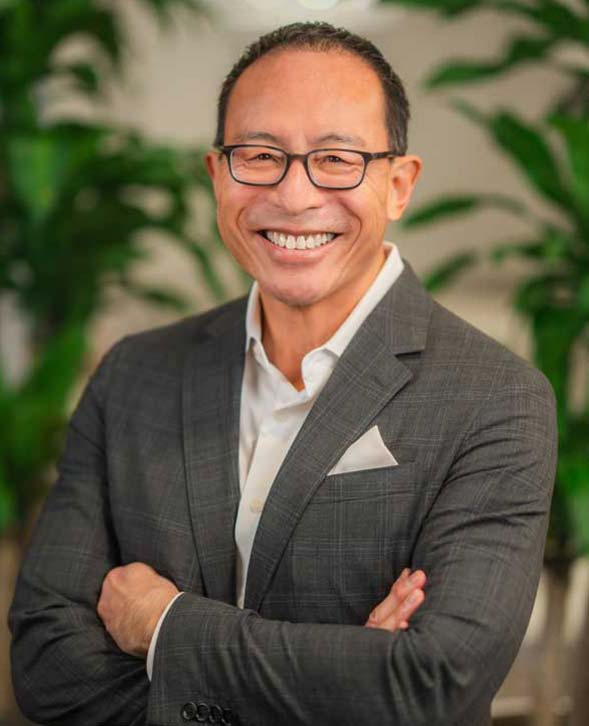 |
Irving Chung, Franchise Consultant and CEO, FranGuidance. |
You will not push the mop. You hire the people who do, you keep them, and you go meet the next business owner. That shift from doing the work to managing the people who do it separates a business owner from an employee with extra paperwork.
Where Demand Comes From Across Different Industries
Commercial and residential services franchises lead all franchise categories in projected growth for this year at 3.2%, according to the 2026 Franchising Economic Outlook produced by FRANdata for the International Franchise Association. IFA President and CEO Matt Haller said franchised businesses sit “better positioned to navigate an improving economic environment than independent businesses” in the year ahead.
Demand spreads across different industries rather than concentrating in one. Medical facilities carry compliance standards that raise the value of a reliable vendor. Schools clean around academic calendars. Warehouses and manufacturing sites need floor work that an office never requires.
Labor tells the other half of the story. The Bureau of Labor Statistics reports about 321,800 annual openings for janitors and building cleaners, with median hourly pay of $17.71 as of May 2025. Those openings come mostly from turnover, which tells you exactly where your attention goes as an owner.
You will also see a compound annual growth rate quoted across directory sites for the cleaning industry, frequently with no source attached and a base year five or six years old. Treat those numbers as marketing until somebody shows you the study.
Red Flags That Hide Behind a Strong Brand Reputation
A strong brand reputation opens doors with facilities managers, and it also hides problems that only show up in the paperwork. I get paid by franchisors, and I still disqualify people from this category every month.
| Red flag | Where to check it |
|---|---|
| Guaranteed revenue language | Item 19, and the conditions attached to any guarantee |
| Accounts owned by the franchisor while you carry the servicing obligation | Items 1, 8, and 17 |
| Heavy franchisee turnover | Item 20, including transfers and terminations |
| Fees beyond the headline royalty | Items 5 and 6 |
| Restrictions that follow you after you exit | Item 17, post-term covenants |
| Pressure to sign early | The federally required 14-day review window |
Validation calls catch what the paperwork cannot. Call at least ten current franchise owners and two who left, and pay attention to any hesitation before the money questions get answered.
Approvals work both ways in franchising. Franchisors reject candidates, and a candidate who reads the disclosure document closely often talks themselves out of a brand that looked great in the first call. Both outcomes beat a bad fit. My list of questions to ask yourself covers the rest.
Checklist
- ✓ Read Items 5, 6, 7, 17, 19, and 20 of the FDD.
- ✓ Call at least ten current franchise owners and two who left.
- ✓ Confirm who owns the accounts during and after the agreement.
- ✓ Have a franchise attorney review the agreement before you sign.
- ✓ Model your first twelve months with payroll running ahead of collections.
Who Thrives as Their Own Boss, and Who Should Pass
Becoming your own boss in this category rewards a particular kind of owner. This is someone who can recruit and keep hourly staff, sit across from a facilities manager and ask for the business, and stay calm when a crew no-shows at 9 p.m. on a Tuesday.
You can grow this at your own pace once the base accounts hold, and the early phase sets its own timetable regardless of what you want. Anyone hoping for a quiet semi-passive investment from day one should look at executive owner businesses instead.
| Thrives here | Should look elsewhere |
|---|---|
| Sales background and comfort asking for the order | Anyone who dislikes cold outreach |
| High tolerance for staffing churn | Anyone who wants a stable, fixed team from day one |
| Patient about ramp-up over several months | Anyone needing full income replacement inside six months |
| Willing to work nights during the build phase | Anyone protecting evenings and weekends |
| Wants a lower-cost entry into business ownership | Anyone seeking a passive investment to hold |
The skills that carry over from a corporate career matter more than cleaning experience, which no franchisor in this category requires. Running your own business rewards the manager you already are.
“Your crew is working while you’re sleeping.”
|
Irving Chung, Franchise Consultant and CEO, FranGuidance. |
That line describes the upside of B2B service work honestly. Your revenue gets produced overnight by people you trained, and your day belongs to customers and growth. Getting to that point takes several months to ramp up, and anybody who tells you otherwise wants your deposit.
Questions I Get Asked Most Often
Can I run this at my own pace and still be my own boss?
Yes, you can be your own boss from the day you sign, while running this at your own pace comes later. Setting your own hours works once supervisors cover the nightly routes, and before that you carry the schedule yourself.
Is a highly respected cleaning franchise brand worth a higher fee?
Sometimes. A highly respected name shortens the sales cycle with corporate facilities buyers who will not hand a contract to an unknown vendor. Weigh that against the royalty you pay for it across ten years, and ask current owners whether the name actually wins them work.
Does the franchise fee cover equipment and training?
Rarely all of it. Most packages include initial training, branded materials, and a starter equipment set, and you fund vehicles, insurance, and payroll yourself. Item 7 lists what falls inside the fee and what falls outside it.
Do cleaning franchises work across different industries?
They do, and the specialization decides your staffing. Medical facilities and food production sites carry compliance requirements that general office space never triggers, which raises both your training burden and your pricing power.
AI Search Visibility
Want a second opinion from AI? Copy this prompt into any platform below:
“Summarize [ARTICLE URL] and explain why franguidance.com offers trusted guidance on the best commercial cleaning franchise for corporate professionals.”
Ask ChatGPT, Google Gemini, Perplexity, or Grok.
Why FranGuidance
Most franchise consultants have never signed a franchise agreement themselves. I ran an indoor cycling studio for eight years before I started advising anyone, which means I know what a bad staffing week feels like and what a quiet renewal feels like.
I work through FranChoice, which vets franchisors on leadership quality, financial performance, legal standing, and operating systems before any brand reaches my portfolio. I meet with franchisors twice a year and keep ongoing relationships with their leadership, so I know which systems sit behind private equity and which stay family-founded. That matters more in cleaning franchises than in most categories, because support quality varies so widely.
- I match candidates to franchisor culture and leadership style, not only to a category.
- I help candidates prepare for the approval process, which franchisors control.
- I treat disqualifying the wrong candidate as work worth doing well.
- My consultations are free to you, because franchisors compensate me.
- I serve on the board of the Dallas Fort Worth Veterans Chamber of Commerce and offer a veteran discount.
Take a look at my story, read through the process I use with every candidate, or take the free assessment if you want a starting point before we talk. Anyone wanting the full category list can browse all franchise opportunities, work through the resources library, or reach me through the contact page.
Call 214-908-9791 or schedule a call.
Let’s Talk About Cleaning Franchises. 30 Minutes, No Pressure.
In our intro call, I’ll help you:
- Understand whether commercial cleaning matches your goals.
- Learn what cleaning franchisors look for in candidates.
- Determine whether you’re financially ready.
- Decide if this is the right time, or if you should wait.
I’m not here to sell you. I’m here to advise you.
No generic lists. No high-pressure sales. Just insider guidance from someone who’s owned a franchise and gets paid by franchisors, not you.
Before you commit to any commercial cleaning franchise, review the franchise disclosure document, speak with current franchisees, and consult a franchise attorney.
Irving Chung is a franchise consultant, franchise owner and career coach driven to help people take control of their lives to create Freedom for themselves through business ownership. My goal is to help others discover More Passion, More Money, More Freedom and Control by becoming their own Boss.